

Introduction
Every building has to earn its keep. It needs to hold up under pressure, shrug off the weather, and keep running smoothly year after year without draining the budget on repairs. That’s exactly why durable steel structures have become the go-to choice across Australia’s commercial, industrial, and agricultural sectors. Whether it’s a warehouse, a factory floor, a workshop, or a head office, steel gives builders and business owners something hard to find elsewhere: strength that doesn’t fade, flexibility to grow, and a lifespan measured in decades rather than years.
What sets steel apart from more traditional materials is how little it asks for in return. It doesn’t warp, crack, or shrink the way timber or masonry can. It just performs quietly and consistently under heavy loads, in large open spaces, and in demanding working environments. If you’re planning a new facility or expanding an existing one, steel is worth serious consideration for the value it locks in over the life of the building.
What Are Durable Steel Structures?
Durable steel structures are engineered building frameworks made from high quality structural steel, designed to provide exceptional strength, stability, and long term performance. They are widely used in commercial, industrial, and infrastructure projects due to their reliability, flexibility, and low maintenance requirements.
Engineered for Strength and Reliability
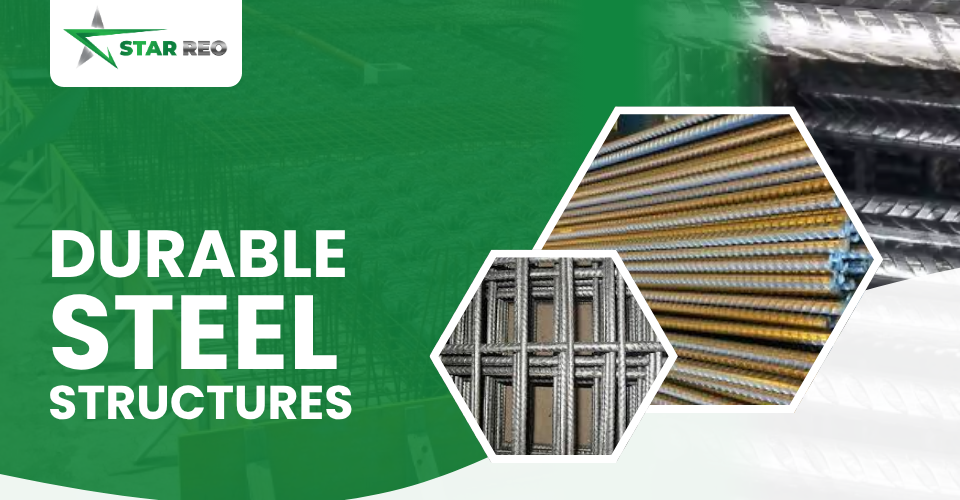
Durable steel structures are buildings or structural frameworks built from high quality steel, including steel reinforcement mesh, engineered from the ground up for strength and long term reliability. Every beam, column, and connection is manufactured to precise specifications, so the finished structure can carry real loads under real conditions, not just meet a spec sheet.
Built to Deliver Consistent Performance
Steel doesn’t crack. It doesn’t warp, and it won’t shrink the way timber or masonry sometimes does once the years start adding up. It holds its shape and keeps doing its job for decades, which is exactly why it’s become the material of choice on commercial, industrial, and infrastructure projects where getting it wrong isn’t an option.
Flexible for Different Building Applications
Steel also bends to the project rather than the other way around. Engineers can shape a steel frame to fit almost any brief, from a compact workshop to a sprawling warehouse or a multi-storey office fit-out. That means businesses get a building designed around how they actually operate, without trading away strength or durability to get there.
Benefits of Durable Steel Structures
Choosing steel isn’t just about building something strong. It’s a long-term investment in performance, efficiency, and lower ownership costs over the life of the asset.
Here’s what steel brings to the table:
- Exceptional structural strength for demanding applications
- Faster construction timelines compared to many traditional methods
- Lower maintenance requirements over the building’s lifespan
- Natural resistance to pests, rot, and moisture damage
- Greater design flexibility for custom-built projects
- High recyclability, making it a genuinely sustainable material choice
- A long service life with strong return on investment
Put together, these advantages explain why structural steel construction remains one of the most trusted building solutions in Australia today.
How Durable Steel Structures Improve Building Performance
Superior Strength, Built In
Strength is where steel really shines. It has an outstanding strength-to-weight ratio, which means buildings can carry significant loads without needing a forest of extra columns and supports. That translates directly into large open floor spaces, the kind that make day-to-day operations easier and more efficient.
For manufacturing, logistics, and warehousing businesses, clear-span designs are a genuine asset. They give machinery, storage systems, and vehicles room to move freely, creating a building that works just as well for current operations as it does for whatever growth comes next.
Low Maintenance, Long-Term Reliability
Steel earns its reputation for reliability by simply not causing problems. Well-fabricated, properly protected steel resists many of the issues that plague other building materials over time.
Protective coatings and steel tie wires help keep corrosion at bay, while careful engineering ensures every component works in harmony to deliver lasting stability. The payoff is fewer surprise repair bills and fewer operational disruptions caused by structural issues down the line.
With routine inspections and basic upkeep, a steel building can keep performing at a high level for decades, not just years.
Where Durable Steel Structures Are Commonly Used
Steel’s versatility means it fits comfortably into almost any industry, adapting to different operational demands without losing structural reliability.
| Industry | Common Applications |
| Industrial | Manufacturing plants, processing facilities, warehouses |
| Commercial | Office buildings, retail spaces, showrooms |
| Agriculture | Machinery sheds, barns, grain storage |
| Logistics | Distribution centres and freight facilities |
| Mining | Equipment shelters and operational buildings |
| Aviation | Aircraft hangars and maintenance facilities |
This range shows just how well steel building solutions can be tailored to businesses of every size and sector.
Why Quality Steel Fabrication Matters
Even the best steel is only as good as the fabrication behind it. Every structural component needs to be manufactured to exact specifications to guarantee proper alignment, even load distribution, and reliable performance once it’s in place.
Professional fabrication also speeds up the build itself. Because most components arrive on site pre-prepared, installation is faster and more accurate which means fewer delays, less wasted material, and a better shot at staying on schedule and on budget.
There’s a safety dimension too. Precisely manufactured connections and accurately fitted components create a structure that holds up under everyday operating conditions and performs when it matters most, like during severe weather.
All of this is why choosing an experienced construction partner matters just as much as choosing the right materials.
Factors to Consider Before Investing in Steel Structures
No two construction projects are identical, so a bit of upfront planning goes a long way. Getting clear on your long-term business needs early makes it far more likely the finished building delivers real, lasting value.
Before you break ground, it’s worth thinking through:
- The intended purpose of the building
- Future expansion plans
- Site conditions and environmental factors
- Compliance with Australian building standards
- Material quality and fabrication expertise
- Construction timeline and budget
- The track record of the steel construction company you’re working with
Working through these questions early helps surface potential challenges before construction starts, which makes for a smoother project overall.
Why Businesses Continue to Choose Steel Construction
Delivers Long-Term Value and Flexibility
Australian businesses keep coming back to structural steel construction because it hits a combination that’s hard to beat i.e strength, efficiency, and value that holds up over time. Operations change as a company grows, and steel buildings are built to change with them, without needing major structural rework every time the business shifts direction.
That adaptability shows up in practical ways. Extra storage, more production capacity, a reworked floor plan, steel structures tend to accommodate this kind of change more easily, and more affordably, than a lot of conventional builds.
Supports Sustainable Construction
Sustainability isn’t a side note anymore, it’s part of the decision-making process on most projects, and steel holds up well here too. It’s one of the most recycled materials on earth. Much of what goes into a new steel structure has already been recycled once, and it can be recycled again once the building reaches the end of its working life, which keeps waste out of landfill and demands off virgin resources.
Improves Construction Efficiency
Speed matters too, and it’s one of steel’s underrated strengths. Because components are fabricated off-site in controlled conditions before ever reaching the build, quality tends to be higher and on-site delays fewer. Installation moves faster as a result.
A shorter build means a business can open its doors sooner, which cuts labour costs and improves the return on the whole project. Add that to steel’s strength, adaptability, and sustainability credentials, and it’s easy to see why it remains one of the most practical options for commercial and industrial developments today.
Conclusion
Investing in durable steel structures means investing in a building that’s designed to perform reliably for years, all while supporting your business as it grows. Their strength, adaptability, and low maintenance demands make them a smart fit for commercial, industrial, agricultural, and infrastructure projects alike.
At Starreo, we know every project comes with its own set of requirements. Starreo offers durable steel materials by combining quality products, precise engineering, and skilled workmanship to deliver steel building solutions built to last. Whether you’re planning a warehouse, a factory, a workshop, or a custom commercial building, durable steel structures provide a dependable foundation for long term success, safety, and value.
