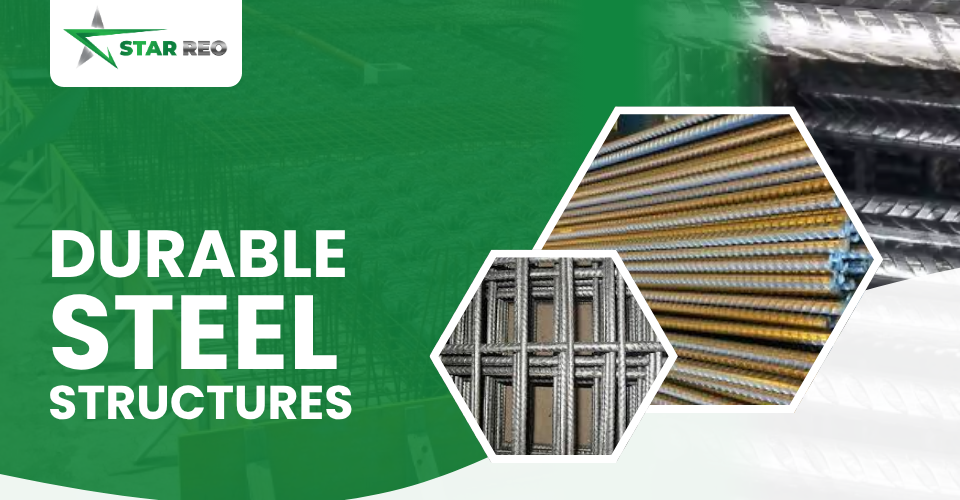


If you are planning a slab, driveway, shed floor, or trench, the right steel reinforcing mesh will decide how long your concrete lasts. This guide explains when you need reinforcement, the options available, and how Starreo products fit common jobs. It also adds practical notes on placement, cover, joints, and curing so you get predictable results on site without rework.
Why builders choose Starreo
Starreo supplies reinforcing mesh, trusses, structural steel, and prefabrication services. Our steel is 100 percent recyclable and compliant with Australian standards. You get reliable quality, moisture resistance, heat resistance, and a 48 hour turnaround on quotes.
We focus on consistent wire sizes, accurate sheet dimensions, and clean welds so placement is fast and waste is low. Our team can review drawings, confirm lap lengths and cover, and coordinate deliveries in the order you plan to place the sheets. This helps you keep pours on schedule and reduces handling damage.
What is steel reinforcing mesh
Steel reinforcing mesh is a welded wire grid placed inside concrete. It controls cracking and improves load capacity by spreading forces across the slab.
By tying the concrete together, steel reinforcing mesh limits crack width from shrinkage and temperature movement. It also helps slabs resist bending from point loads and traffic. Correct position in the slab depth is important. Keep the mesh on chairs so it sits at the design cover and works as intended with control joints.
Rebar vs mesh
Rebar is a ribbed bar used in beams, edges, and high load zones. It is ideal for concentrated loads, thickened edges, and around openings where you need anchorage and local stiffness.
Mesh is a welded sheet that strengthens the field of the slab. It gives broad area control of crack width and helps the whole surface carry moving loads.
Many slabs use both for best results. Steel reinforcing mesh covers the wide areas. Rebar supports edge beams, penetrations, and zones under racks or walls. This mix balances cost and performance and follows common engineering practice.
Do all concrete slabs need reinforcement
Not every small path needs steel reinforcement in slab construction. Most slabs that carry loads or sit on reactive soils do. Reinforcement helps manage shrinkage, thermal movement, differential settlement, and repetitive loading from vehicles or trolleys.
Use reinforcement when you expect:
- Vehicles, forklifts, or heavy racks
- Frequent foot traffic or vibration
- Soft or variable subgrade
- Temperature changes that cause shrinkage cracking
- Local codes that require reinforcement
Also consider reinforcement where you have slab penetrations for plumbing, changes in thickness, ramps and turn zones, or aggressive exposure like coastal spray and frequent washdown. These conditions increase stress and benefit from steel reinforcing mesh to keep cracks tight and extend service life.
How to choose the right mesh
Match the mesh to the structural need and site conditions. Start with the engineer specification, then check logistics so sheets fit access points and can be placed without extra cuts.
Key steps:
- Check engineering drawings and local rules
- Select a pattern that suits the load path
- Choose coatings that control corrosion
- Plan lap lengths, concrete cover, and chair spacing
Confirm delivery sequence for each pour, allow space for staging, and plan joint layout. Stagger laps so they do not line up across the slab width. Keep mesh clear of the formwork and maintain cover at edges and corners.
Starreo mesh options and where to use them
Galvanised Mesh
Best for: coastal or wet sites that need extra corrosion control.
Use it for: driveways near the coast, basements with moisture, outdoor slabs with frequent rain.
Galvanised mesh has a zinc coating that shields steel from corrosion. It is a strong choice for splash zones, outdoor work areas, and spaces with regular cleaning. It supports longer service life where water exposure is common.
Benefits
- Strong reinforcement for slabs and pavements
- Zinc coating for corrosion resistance
- Reliable for residential and commercial work
- Lower risk of rust staining and edge deterioration
- Better durability in coastal or high humidity locations
Rectangular Mesh RL Series
Types: RL1218, RL1118, RL1018, RL918, RL818, RL718
Best for: slabs with loads that move mainly in one direction.
Use it for: long bays in warehouses, corridors, strips, and ramps.
Rectangular mesh places more steel along the primary load path. This suits aisles, travel lanes, and ramps where traffic is directional. It can reduce steel weight compared with square mesh when the design is one way spanning.
Benefits
- Precision engineered for consistent strength
- Good load distribution along the major axis
- Sizes that align with common designs
- Efficient for strips and long panels
- Helps control cracks where traffic lines are clear
Square Mesh SL Series
Types: SL62, SL72, SL82, SL92, SL102, SL81
Best for: general purpose slabs with mixed or uniform loads.
Use it for: house slabs, garage floors, patios, and shed floors.
Square mesh shares loads in both directions. It is easy to cut and lap, and supports slabs with turning traffic, variable loads, and irregular layouts. It is the common choice for residential and light commercial floors.
Benefits
- Even load sharing in both directions
- Easy to place and cut
- Options for light, medium, and heavy duty slabs
- Smooth installation with standard bar chairs
- Versatile for mixed use spaces
Square Rib Ute Mesh
Best for: custom ute builds, trays, cages, and transport projects.
Use it for: ute trays, cages, utility racks, and DIY upgrades.
The square rib profile adds stiffness and helps panels resist vibration, impact, and daily wear. It cuts cleanly for custom shapes and brackets, which speeds fabrication.
Benefits
- Rigid square rib profile
- Durable for daily use
- Simple to fit and modify
- Good strength to weight balance for mobile setups
- Suitable for hobby and professional builds
Trench Mesh L Series
Types: L11TM3, L11TM4, L12TM3, L12TM4
Best for: footings and trenches that support walls and edge loads.
Use it for: strip footings, slab edge beams, and services trenches.
Trench mesh fits narrow excavations with minimal waste. It provides the strength needed to carry walls and concentrated loads, and helps stiffen slab edges where movement and curling can occur.
Benefits
- Designed for narrow trenches
- High strength for foundation work
- Made to meet Australian standards
- Speeds placement in footings and beams
- Reduces cutting compared with standard sheets
Installation tips that protect slab performance
- Support mesh on chairs to maintain cover from the ground
- Overlap sheets to the specified lap length and tie securely
- Place control joints at the correct spacing and depth
- Keep mesh clear of formwork to maintain cover on all sides
- Place control joints at the correct spacing and depth
- Cure the concrete to reduce shrinkage and early cracking
Add these checks to improve outcomes on site. Stagger laps so they do not line up. Recheck cover at edges and around penetrations. Keep pump lines and wheelbarrows from dragging mesh out of position. Begin curing as soon as the surface allows and protect edges from early traffic.
FAQs (Frequesntly Asked Questions)
No. Small garden paths may not need it. Driveways, garages, and house slabs usually benefit from steel reinforcing mesh because they carry higher loads and see more movement. Mesh helps control crack width and improves long term serviceability.
Square mesh from the SL series is common for driveways. Choose the size that matches your slab thickness and expected vehicle loads. Good subbase compaction and joint timing also play a big role in performance.
Use galvanised mesh in coastal, wet, or aggressive environments where corrosion control supports long service life. It is also useful in washdown areas and basements with moisture.
Yes. Many designs place mesh in the field and use rebar in edge beams, around openings, and at high load points. Follow the engineer specification so both elements work together.
Follow the engineer’s specification and local standards. As a guide, maintain the required concrete cover and lap the mesh per the nominated length on drawings. Keep laps tied and staggered to avoid weak planes.
It refers to welded wire mesh sheets used to reinforce concrete. Check wire size, spacing, sheet dimensions, and coating type before ordering. Confirm delivery in the sequence you plan to place the sheets.
Final thoughts
Choosing the right steel reinforcing mesh makes slabs stronger and longer lasting. Starreo can review your drawings, confirm the best product, and schedule supply to match your pour date. Share your plans and site conditions, and our team will prepare an accurate takeoff and a fast quote. Build with confidence and keep your project moving with the right reinforcement from Starreo.